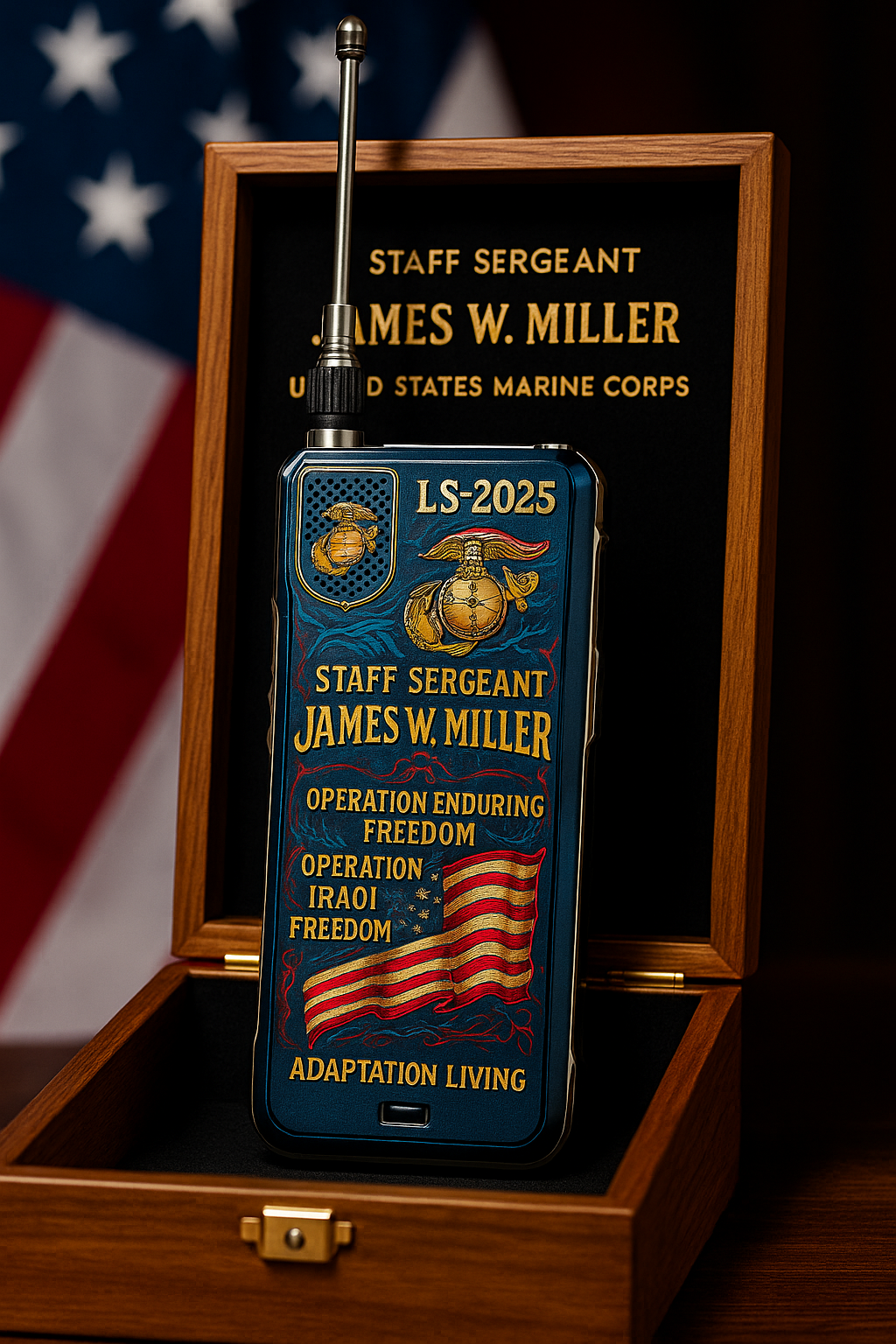
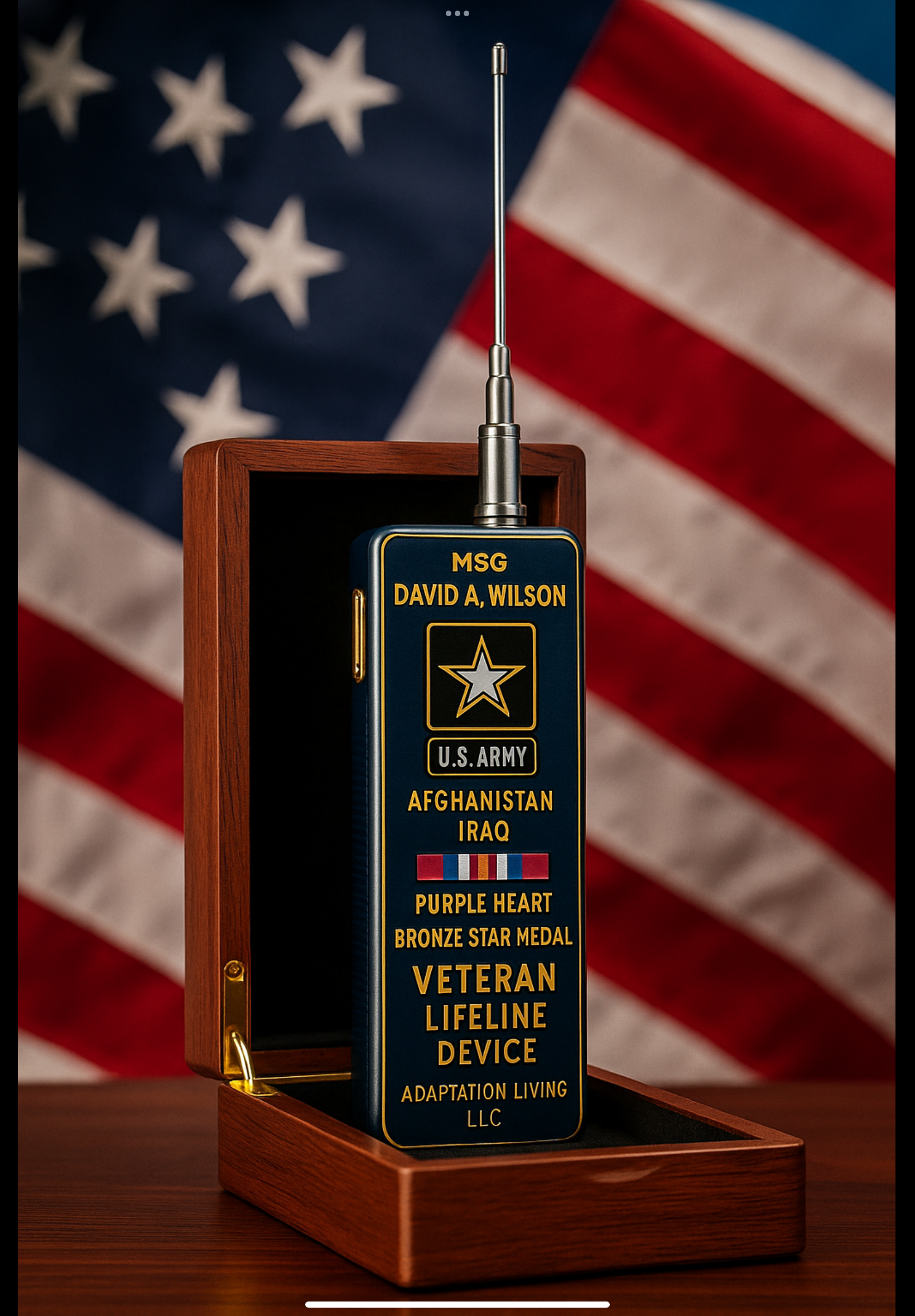
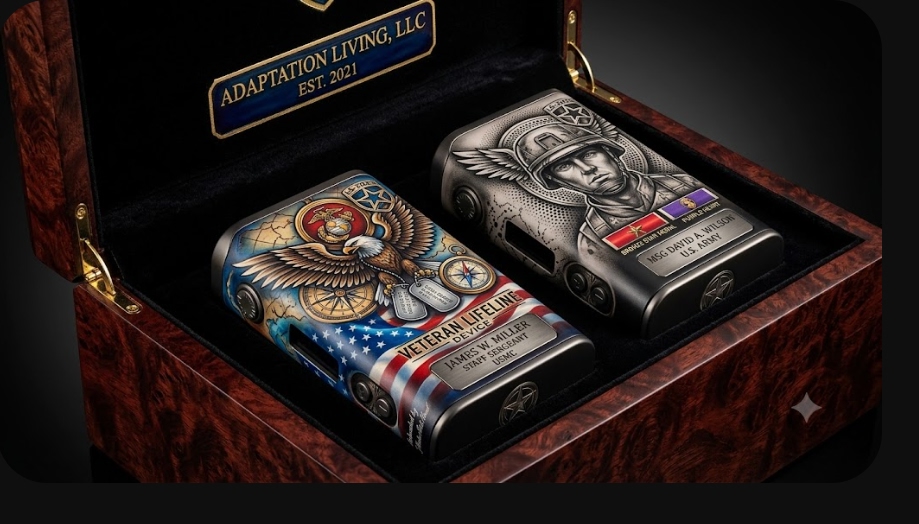
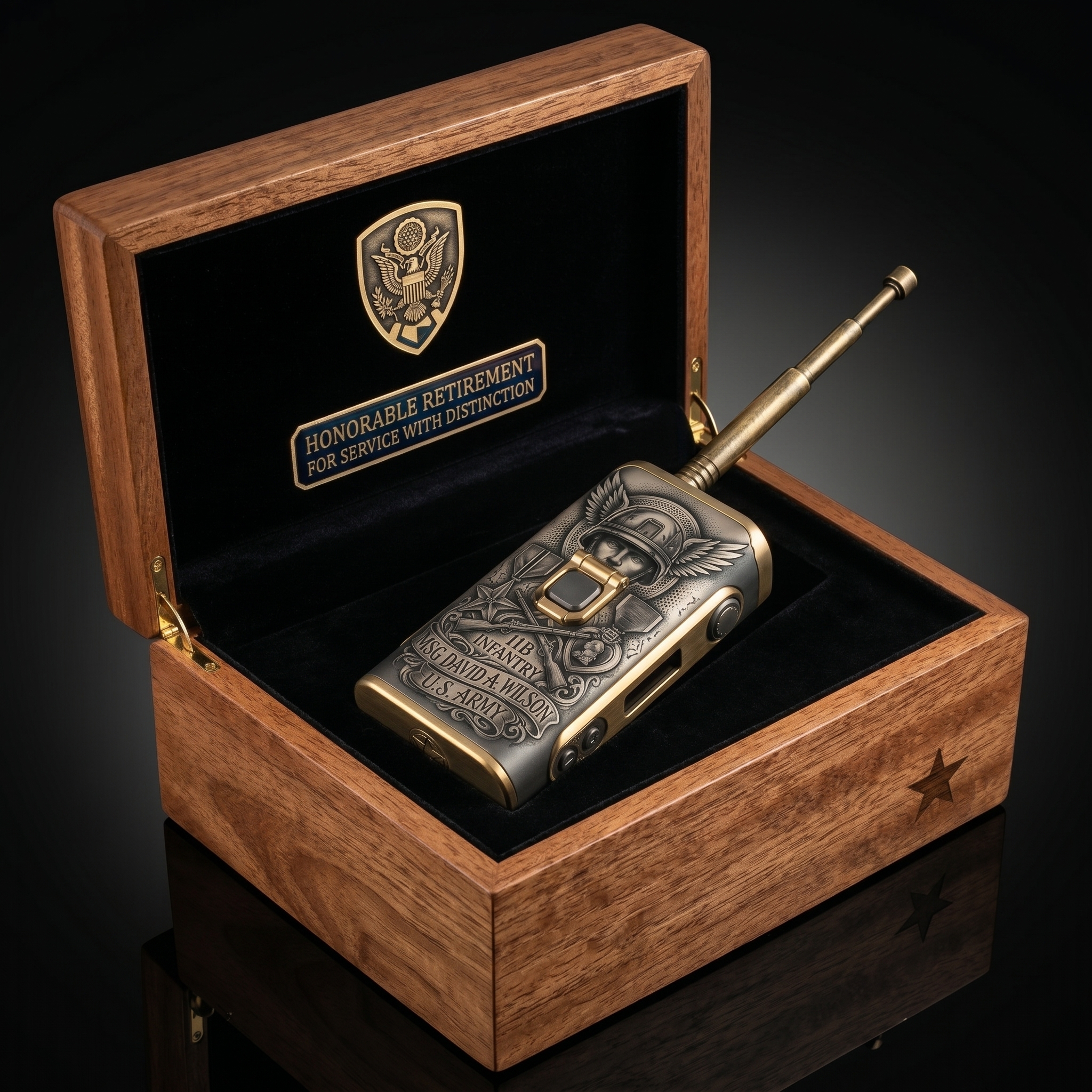
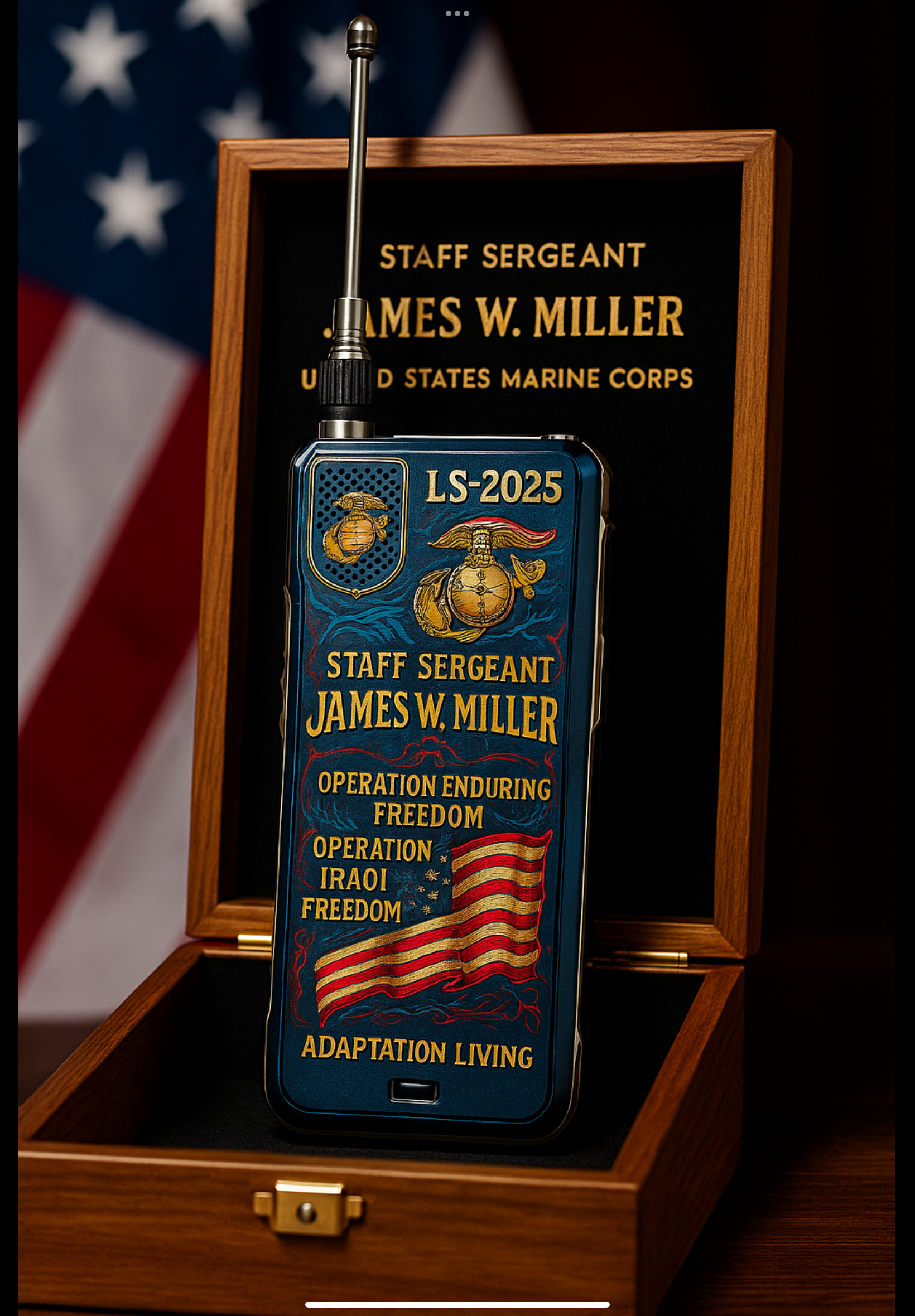
LS‑2025 is a dedicated communication device and linked app, issued to every service member at discharge — both a token of appreciation and a permanent connection point. It is engraved with their service and presented in a wooden box, so it is carried with pride, not stigma.
One press opens a secure line to a fellow veteran matched by branch, unit, and deployments — someone who understands. A licensed VA clinician oversees every connection in real time, and only a clinician can escalate to 911. A conversation becomes real help in seconds.
Every veteran leaves the service with a dedicated device — custom-engraved with their career, presented as an honor in a polished wooden box. Not flagged. Not opt-in. The stigma is gone because everyone carries one.
A beacon routes to peers matched by branch, MOS, deployments, and unit. The person on the line stood the same fire watch and came home to the same silence. That familiarity is what keeps a veteran talking.
Every transmission is monitored in real time by licensed VA staff on a 911-style console with the veteran’s full context. Only a clinician — never an automated rule — decides when 911 is dispatched.
Presented at discharge as a thank-you in physical form — a polished wooden box, a name plate, the branch burned into the wood. Not a generic piece of plastic with a sticker. It is theirs.
A veteran triggers the device or the app. The lifeline goes live — overriding silent and focus modes.
The system ranks the ten closest peer responders — by branch, MOS, deployments, awards, and unit history.
A fellow veteran picks up and authenticates. If one can’t be reached, the next is already ringing.
An encrypted two-way channel opens between the veteran in crisis and the responder who answered.
A licensed clinician monitors in real time — diagnoses, meds, prior crises, safety plan, contacts, all on one screen.
Only when a clinician confirms the threshold is NG911 / RapidSOS dispatched — with exact GPS and the flags responders need: weapons, intoxication, or threats to others.
The veteran is never asked to repeat the worst day of their life to three operators while the clock runs. Responders don’t walk in blind — and the same data, over time, shows the language and stressors that precede a crisis, so prevention gets sharper.
LS‑2025 is issued to every eligible veteran at discharge — not just those already in crisis. Because everyone carries it, no one can be singled out as “the suicidal vet” for having one.
A veteran at work, on the street, or without a home can carry it without drawing a second look. To anyone watching, it reads as a symbol of service and a way to keep serving — part of a national mission, not a sign of trouble.
Veterans are often the best people to reach other veterans. Holders can volunteer for scheduled windows when they stand watch — taking calls from those who match their service background — as part of a distributed national support team.
And the same device is theirs to use if their own footing slips. Volunteering to help others never costs a veteran the right to reach out.
Veterans leave the service still needed. LS‑2025 turns “I’m done” into “I still have a mission” — which itself cuts the isolation that discharge can bring.
The Veterans Crisis Line works for the people who pick up the phone — 1.3 million contacts in FY2025, 97% satisfaction. But getting there takes two things going right, and for the 17.5, at least one of them doesn’t.
First, you have to want to dial it — with enough fight left to ask a stranger for help. Second, the voice on the other end has to be someone you can actually talk to. A veteran in crisis knows within ten seconds whether that person ever wore the uniform. LS‑2025 closes both gaps before the worst night ever comes.
In 2022, founder Brandon Bible entered the VA’s Mission Daybreak challenge with a concept he called Veterans Saving Veterans — built on one hard question: what if every veteran left the service with a dedicated radio that could save their life? That first submission held the backbone LS‑2025 still runs on today.
It did not appear last week in a pitch deck. It began as a full written system concept and has been refined ever since — into a veteran-only, 911-style network staffed by veterans and clinicians, with real-time crisis detection, satellite reach “anywhere under the sky,” and custom device artwork. LS‑2025 is the hardened version of that original idea.
“As long as I am still breathing, I will do everything I can to put this device in the hands of every veteran who has earned it.”
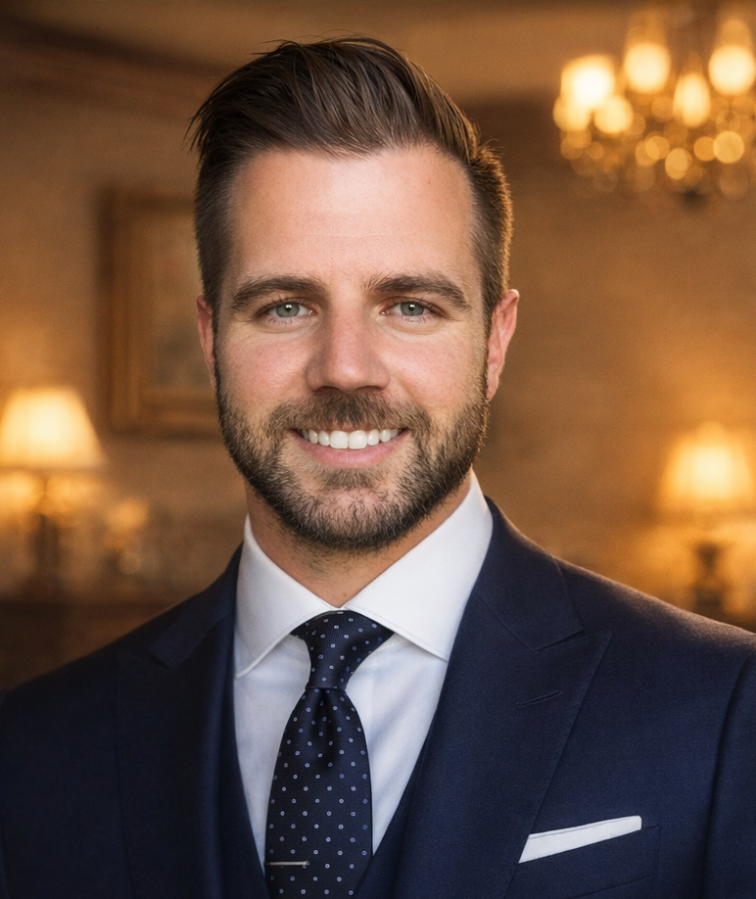
Brandon Bible served as a U.S. Army infantry soldier. Four years after entering Veterans Saving Veterans into Mission Daybreak, LS‑2025 is built end-to-end: 256 source files, a working cascade engine, a dispatch console, twelve role-gated portals, and hardened cloud infrastructure.
Every piece of data in this system is used for one thing only — saving the lives of the people who carry it. Permanent. Ethical. Transparent.
Clinical oversight, Lighthouse / FHIR credentials, and the authority to put this where it belongs.
Start a conversation →Issuance at the point of discharge — the moment that makes the whole network build itself.
Start a conversation →Mission-aligned funders who back infrastructure-class veteran technology.
Start a conversation →FirstNet and Iridium agreements for the dual-mode link that never fails silent.
Start a conversation →Licensed staff to operate the console around the clock as part of their job function.
Start a conversation →The deployment phase — hardware, carriers, ATO, and 24/7 operations — is a capital problem, not an engineering one.
Start a conversation →Run a business? Adaptation Living is an AI integration agency — our agents answer phones, set appointments, and run day-to-day operations. That work funds the next phase of this mission.
Talk to the agency →Your support funds the deployment phase — hardware production, carrier agreements, and the operations to run a national veteran-only network around the clock.
Payments processed securely by Stripe. Support for Adaptation Living LLC’s veteran program — confirm 501(c)(3) / fiscal-sponsor status before using “tax-deductible” language.